
Search Nevada Inmate Records
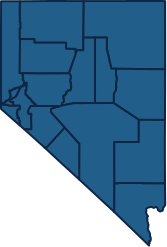
The Nevada prison system comprises various correctional facilities accommodating individuals convicted of various crimes, from misdemeanors to felonies. The system consists of state prisons and county jails. Unlike most states, Nevada does not have private prisons or federal correctional institutions. Presently, there are 17 state prisons and 19 county jails across the 17 counties in Nevada.
There are no federal correctional facilities in Nevada. The state uses federal detention centers in nearby cities, such as California and Arizona, to house inmates from Nevada convicted of federal crimes. There are currently over 1,300 federal inmates from Nevada renamed in federal facilities outside the state. Likewise, there are no privately operated prisons in Nevada. In 2019, Nevada lawmakers voted on a bill banning private prisons. Nevada has about 200 inmates previously housed in private prisons, now located in out-of-state incarceration facilities.

Nevada correctional facilities also include female detention centers and juvenile correctional centers. The state has 3 female detention centers housing women convicted of serious felonies and women awaiting trial. Likewise, the juvenile facilities in Nevada cater to minors who commit a delinquent offense. Nevada has 3 state facilities dedicated to housing persons between the ages of 12 and 18 adjudicated for delinquent crimes by a juvenile court.
The Nevada prison system is structured into state prisons and county jails. The state prisons are managed and operated by the Nevada Department of Corrections (NDOC). State prisons accommodate inmates convicted of serious crimes and felonies, with sentences over one year. The county Sheriff's Offices are in charge of the county jails in Nevada. County jails house persons convicted of misdemeanor offenses and serving sentencing under one year. It also holds individuals awaiting trial.
The NDOC oversees prison security, ensures the safety of inmates and correctional staff, and provides rehabilitation programs and reentry services for inmates. The NDOC is led by the Director, appointed by the state governor. It is divided into four divisions: Operations, Inmate Services, Medical and Mental Health Services, and Administrative Services. These divisions manage the daily operations, provide vocational training and educational programs, and ensure inmates have access to healthcare.
Nevada has an incarceration rate of 610 per 100,000 people, almost the same as the U.S. incarceration rate of 614 per 100,000 persons. On average, there are over 19,000 persons incarcerated across correctional facilities in Nevada. State prisons account for over 53% of incarcerated persons with over 10,000 inmates. County jails, on average, accommodate over 7,000 inmates yearly. While there are no physical federal correctional institutions in Nevada, the state has over 1,300 inmates convicted of federal crimes. These inmates are remanded in state or private correctional facilities outside Nevada.

Nevada Department of Corrections Inmate Search
The NDOC is responsible for the operations and administration of state prisons. It manages inmate housing, oversees prison staff, and provides medical, mental, and dental services. Furthermore, the NDOC keeps records of inmates incarcerated in state prisons. It maintains the Offender Search tool containing information relating to inmates currently held across state prisons in Nevada. However, the NDOC Offender Search tool provides access to basic information on inmates sentenced and currently incarcerated in Nevada state prisons. It does not provide information on individuals sentenced to probation, persons awaiting trial, or parolees.
Persons interested in accessing inmate records from the NDOC may visit their website and click on the "Offender Info" tab on the homepage. A drop-down menu appears, and searchers may click on the "Offender Search". It opens the webpage where inmate records may be searched using the offender's ID or the inmate's first and last name.

Find Inmate by Name
Inmate records are accessible using the first and last names of incarcerated individuals. The state permits records seekers to conduct searches using only one name. However, such searches will return a list of results with all names matching the searched criteria. Searchers may sift through the list to locate the precise inmate records required.

Find Inmate by Number
Record seekers may also search inmate records using the inmate's number or offender identification. An offender Identification number is a unique number assigned by the NDOC to individuals convicted of crimes. The offender ID is assigned to inmates during the booking process in a Nevada correctional institution. The Offender's ID number is a 7-digit number that helps to track inmates within the state's correctional institution.
How Many Inmates Are Currently Incarcerated in Nevada?
Nevada has an estimated total incarcerated population of about 21,600 people across state prisons, county jails, federal facilities, private prisons, juvenile facilities, and other detention categories.
These figures are approximate and combine custody populations that are reported by different agencies on different schedules.
| Facility Type | Population | % of Total | Avg. Daily Cost | Capacity Utilization |
|---|---|---|---|---|
| State Prisons | ~10,900 | 50.5% | ~$92 | ~94% |
| County Jails | ~7,200 | 33.3% | ~$145 | ~82% |
| Federal Facilities | ~1,500 | 6.9% | ~$125 | ~85% |
| Private Prisons | ~900 | 4.2% | ~$110 | ~72% |
| Juvenile Facilities | ~350 | 1.6% | ~$310 | ~58% |
| Other / Pre-Trial | ~750 | 3.5% | ~$135 | ~80% |
| Total | ~21,600 | 100.0% | ~$119 | ~87% |
State Correctional Facilities in Nevada
The Nevada Department of Corrections operates roughly 18 major prisons, conservation camps, transitional centers, and specialty units across the state.
The system includes high-security prisons, specialty and medical facilities, a women's institution, work-release housing, and community corrections facilities.
| Facility Name | Type | Location | Capacity | Population | Security Level |
|---|---|---|---|---|---|
| High Desert State Prison | State Prison | Indian Springs | ~4,175 | ~3,650 | Medium / Maximum |
| Ely State Prison | State Prison | Ely | ~1,180 | ~1,050 | Maximum |
| Lovelock Correctional Center | State Prison | Lovelock | ~1,680 | ~1,450 | Medium |
| Northern Nevada Correctional Center | Medical / Aged Facility | Carson City | ~1,600 | ~1,350 | Mixed / Medical |
| Southern Desert Correctional Center | Specialty Facility | Indian Springs | ~2,150 | ~1,720 | Medium |
| Florence McClure Women's Correctional Center | Women's Facility | North Las Vegas | ~950 | ~870 | Mixed |
| Casa Grande Transitional Housing | Work Release Center | Las Vegas | ~400 | ~310 | Minimum / Transitional |
| Stewart Conservation Camp | Community Corrections Facility | Carson City | ~360 | ~250 | Minimum |
Inmate Demographics & Population Trends in Nevada
Nevada's incarcerated population is predominantly male, with the largest age concentration among adults ages 25 to 44 and a prison population shaped heavily by person offenses, property crimes, and drug-related convictions.
Sentencing and recidivism patterns are broadly consistent with western-state trends, though Nevada's prison population is influenced by rapid population growth in Clark County and a high share of urban admissions.
| Demographic Category | Breakdown | Notes |
|---|---|---|
| Gender | Male: ~90.5%; Female: ~9.5% | Women make up a smaller but steady share of Nevada's prison population, primarily housed at Florence McClure Women's Correctional Center. |
| Age Groups | 18–24: ~8%; 25–34: ~31%; 35–44: ~30%; 45–54: ~18%; 55+: ~13% | The population is concentrated in the 25–44 range, while the 55+ group has grown due to longer sentences and aging in custody. |
| Race / Ethnicity | White: ~43%; Black: ~29%; Hispanic / Latino: ~22%; Native American: ~3%; Asian / Pacific Islander / Other: ~3% | Black and Hispanic residents are represented at higher rates in custody than in the statewide population. |
| Top Offense Types | Person offenses: ~47%; Property: ~18%; Drug: ~16%; Public order / other: ~19% | Violent and serious person offenses account for the largest share of sentenced prison custody. |
| Avg. Sentence Length | ~5–8 years for many felony prison commitments; longer for violent and repeat-offense cases | Nevada uses parole eligibility and statutory credits, so time served can differ substantially from the imposed sentence. |
| Recidivism Rate | ~29%–32% return-to-prison rate within three years | Returns are commonly tied to new convictions, technical violations, housing instability, and substance-use needs after release. |
Parole, Release & Reentry Resources in Nevada
Nevada offers parole review, statutory credit opportunities, community supervision, transitional housing, employment assistance, and benefits support for people preparing to leave custody.
Access usually begins through Nevada Department of Corrections case planning, the Nevada Board of Parole Commissioners, and the Nevada Division of Parole and Probation.
| Program / Resource | Description | Who It Serves | Contact / Access |
|---|---|---|---|
| State Parole Board | The Nevada Board of Parole Commissioners reviews eligible cases and sets parole conditions. | People in NDOC custody who reach parole eligibility. | Apply through institutional caseworkers; information is available from the Nevada Board of Parole Commissioners. |
| Good Time / Sentence Reduction | Statutory credits may reduce time served or advance parole eligibility for eligible conduct, work, education, or program participation. | Eligible sentenced individuals in Nevada state custody. | Calculated by NDOC records staff under Nevada law and institutional policy. |
| Parole Supervision | The Nevada Division of Parole and Probation supervises parolees and sets reporting, treatment, employment, and residence requirements. | People released to parole or probation supervision in Nevada communities. | Assigned through the Division of Parole and Probation before or immediately after release. |
| Reentry Housing | Transitional housing, work-release beds, and community-based providers help with stable placement after release. | People leaving custody who need approved housing or structured reentry support. | Request referrals through NDOC reentry staff, parole officers, Casa Grande Transitional Housing, or approved community providers. |
| Employment Assistance | Job readiness, training, placement referrals, and workforce services are available through state and nonprofit partners. | People on parole, recently released individuals, and justice-involved job seekers. | Access through EmployNV, Nevada DETR, Workforce Connections, Hope for Prisoners, or parole officer referrals. |
| Benefits Restoration | Assistance may include Medicaid, SNAP, identification documents, Social Security issues, and restoration of eligible civil rights after release. | People preparing for release or recently released from custody. | Coordinate with NDOC reentry staff, Nevada DWSS, DMV offices, legal aid organizations, or parole supervision staff. |
| Victim Notification Program | Nevada participates in VINE, which provides custody status and release notifications for registered victims and the public. | Victims, survivors, families, and community members seeking custody updates. | Register through VINELink or Nevada VINE services for automated notifications. |
What Information is Contained in a Nevada Inmate Record?
Inmate records hold information concerning inmates incarcerated in correctional institutions in Nevada. This information includes:
- Name: An inmate's name is the primary identifier or the legal name recorded on the inmate's record. Inmate records contain all the given names of an individual, first, middle, and last name. It also includes all known aliases of the record holder. Typically, common names will yield multiple results. Using the complete first and last name can help locate the specific inmate record.
- Registered No.: The registered number, also called Offender's ID in Nevada, is a unique number assigned to the NDOC to inmates on incarceration. Inmate's number may be 5 or 7 digits. Inmate records are used to locate a specific inmate, especially in cases where inmates have the same name.
- Age: Inmate records contain information on an incarcerated person's age. The age is calculated based on the date of birth given during the booking process. The age reported on inmate records reflects their current age rather than their age at release.
- Race: An inmate's race refers to the racial background recorded on the official prison record. The inmate's race may be white, Black or African American, Hispanic or Latino, Native American, or Asian.
- Sex: Sex relates to the biological gender recorded on the inmate's record. Generally, inmate records in Nevada lists Male or Female as the sex of inmates. Occasionally, the records may specify "Others" as the inmate's sex.
- Release Date: The release date on inmate's records is the expected date they are scheduled to leave the correctional facility. The release date may be shortened based on credits for good behavior or lengthened due to criminal activities during incarceration.
- Location: The location reported on the inmate record indicates the current facility where the inmate resides. Inmate records showing the Regional Office as the inmate's location indicate that the inmate is serving a concurrent sentence in a federal prison. Inmate records may temporarily show in transit for inmates moved from one correctional facility to another.
The release date is the date an inmate is scheduled to leave prison. The release date information may change. The change occurs due to appeals by the inmate, reduced sentence based on the inmate's behavior, or parole. Parole allows inmates to leave the prison before the scheduled release date. Parole information is accessible on inmate records.
The location information on inmate records refers to the facility where the inmate is remanded. However, the location may change due to transfer between correctional facilities for various reasons, such as participation in a rehabilitation program or inmate in need of specialized medical care. Sometimes, the inmate's release date is unavailable on the inmate record. An unknown release date implies that the date the inmate would exit the correctional facility is undefined. It occurs when there is an ongoing legal proceeding or the inmate is serving a life sentence.
Nevada Inmate Records by Counties
Generally, inmate records are kept by the county and state authorities. County-level inmate records refer to incarceration records or persons housed in local county jails. On the other hand, state-level inmate records are prison records for persons incarcerated in state prisons. These records serve different purposes and are kept separately. In Nevada, the county sheriff's offices maintain and manage inmate records from the county jails.
While state prison records are accessible from a centralized database, county-level inmate records are accessible at the specific county sheriff's office where the inmate is held. Larger counties like Clark County offer online search for inmate records. Smaller counties like Lyon and Douglas require searchers to download the county sheriff's mobile app to search for inmate information. Generally, persons interested in accessing inmate records may write a request to the Sheriff's Office Records Division or fill out an online request form.
Are Incarceration Records Public Information in Nevada?

Yes. Incarceration records are public information in Nevada. Nevada's Public Records Act specifies that all state or governmental agency records are public information unless the records are deemed confidential by state law. The law requires that all records are open for inspection and copying to requesters, except such records are sealed or restricted by law to protect personal privacy. Therefore, state and county-level incarceration records are public information accessible to anyone. Publicly accessible information on incarceration records in Nevada includes the inmate's full name, aliases, offender ID, gender, ethnicity, age, height, incarceration location, custody levels, booking information, release date, and parole hearing details.
Although Nevada permits public access to incarceration records, certain sensitive information on the record is restricted or redacted due to security and privacy concerns. Generally, inmates' medical and mental health records, juvenile inmate records, and sealed or expunged inmate records, are unavailable to the public. Furthermore, personal identification information such as social security numbers and home addresses of inmates are redacted from incarceration records to prevent identity theft and harassment.
Federal Prisons in Nevada
All federal prisons are managed by the Federal Bureau of Prisons (BOP). Federal prisons house persons convicted of federal crimes such as human trafficking, immigration violations, and financial fraud. Although there are no federal correctional facilities in Nevada, the state partners with federal detention centers in other states to cater to its federal inmates. Also, the BOP and the U.S. Marshals Service collaborate with state prisons and local jails to accommodate certain federal inmates. Typically, state prisons and county jails assist in holding individuals awaiting trial for federal crimes or persons convicted for federal crimes serving short sentences. The U.S. Marshals Service is responsible for all persons detained for federal crimes awaiting trial or sentencing, while the BOP manages persons convicted for federal crimes with extended incarceration duration.
The Federal Correctional Institution Herlong California accommodates federal inmates from Nevada. Located in Lassen County, FCI Herlong is a medium-security prison accommodating up to 1,500 inmates. The Clark County Detention Center in Las Vegas and the Washoe County Detention Facility in Reno house short-term federal inmates.
Frequently Asked Questions about Inmate Records
You can request a Department of Corrections public record in Nevada by emailing the Family and Community Services Division of the NDOC. You may also mail the record requests to the Division at PO Box 7011, Carson City, Nevada.
Record seekers may look up inmate records for free online using the NDOC Offender Search tool accessible online. The tool allows users to locate an inmate record online by querying the database using the offender's ID or the First and last name. Most county sheriff's offices offer an online search tool to view inmate records. Some counties may require record seekers to download the county sheriff's mobile app to access the records online. To look up inmate records, searchers must have at least one name of the inmate or their offender ID number to look up the records for free. These platforms provide access to inmate information, including inmate status, release date, and inmate location.
To find old inmate records in Nevada, you may contact the NDOC records division or the relevant county sheriff's office. You may also contact or visit the state's archives to access old inmate records, especially for inmates incarcerated a very long time ago.
Death records in Nevada are available through the NDOC or through the county offices for inmates who died while incarcerated in county jails. Also, some inmate records online provide information about deceased inmates.
Inmate's information is updated regularly on the Offender Search tool, although it may take a while for some information to reflect on the system. Generally, the state ensures to update the database daily.
Friends and family members of incarcerated persons may send money through Cashier's checks or money orders using Lockbox Deposit Coupon or Access Corrections Deposits using debit or credit cards. Also, county jails have kiosks located at the detention center's lobby, to deposit money into an inmate account.